
FOR PHYSICIANS
Physician Tests
Comprehensive Molecular Profiling
for Cancer Therapy Selection
Whole Exome and Whole Transcriptome Sequencing, Plus Protein Analysis and Molecular AI. Caris performs artificial intelligence (AI)-enhanced comprehensive molecular profiling to help healthcare providers make more personalized treatment decisions for their patients.
Deep Molecular Insights that Help Healthcare Providers
Caris’ industry-leading laboratories help improve the lives of thousands of patients each day through the analysis of DNA and RNA by whole exome and whole transcriptome sequencing (WES/WTS) in tissue or blood, plus immunohistochemistry (IHC) of key proteins in tissue specimens. Caris innovates AI-enabled techbio solutions to provide predictive algorithms that can further
characterize certain tumors.
navigate
therapies with potential benefits.
Identify
therapies that may
not have been considered.
Determine
drugs unlikely to provide benefit (avoiding toxicities and costs).
Match
patients to clinical
trials.
Tumor Tissue Sample
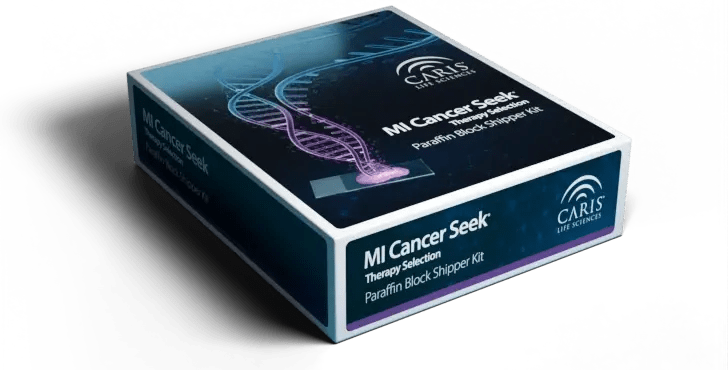
MI Cancer Seek®
Comprehensive molecular insights that help clarify diagnosis, guide treatment decisions, and support better outcomes for patients.
The first and only simultaneous WES/WTS-based assay with CDx indications for adult and pediatric patients (ages 1+).
Tumor Tissue Sample
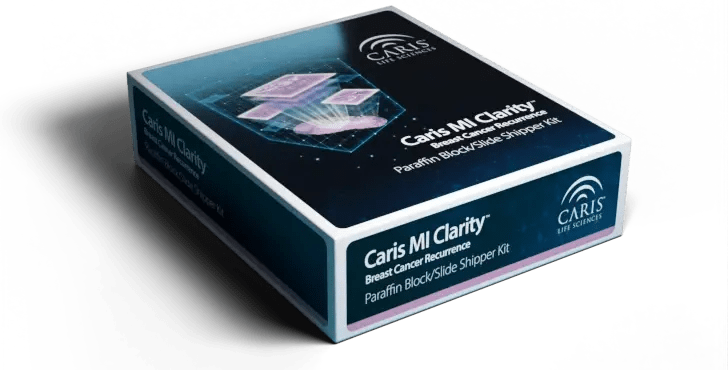
Caris MI Clarity™
AI-powered prognostic test for HR+/HER2- early-stage breast cancer.
Analyzes digitized H&E whole slide images combined with clinical inputs to stratify patients into low- and high-risk categories for both early (Years 0–5) and late (Years 5–15) distant recurrence
Blood Sample
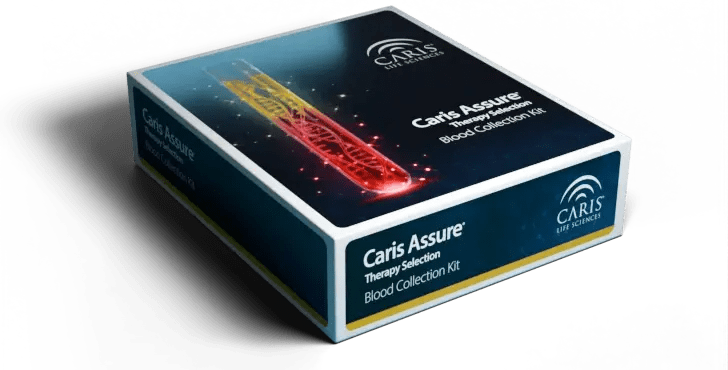
Caris Assure®
Whole Blood. Whole Picture.
Caris Assure is the only liquid biopsy that analyzes both plasma and buffy coat variants, providing a more complete molecular profile.
Blood / Bone Marrow
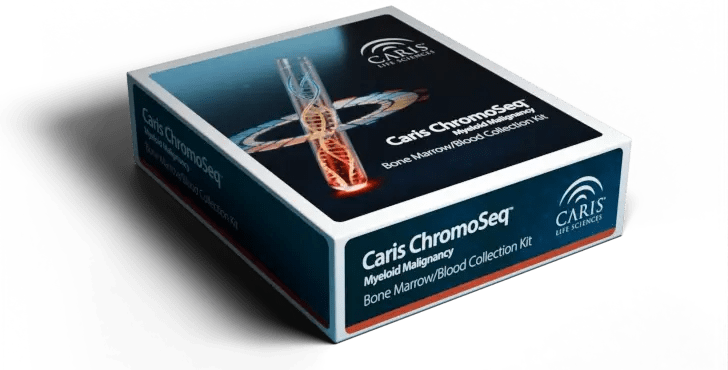
Caris ChromoSeq™
Comprehensive genomic analysis for myeloid malignancies designed to replace conventional karyotyping, FISH, and NGS workflows.
Myeloid malignancies are complex. Genetic testing shouldn’t be. Caris ChromoSeqTM, a whole-genome sequencing assay, brings the complete molecular picture into a single test, supporting more confident diagnosis, risk stratification, and treatment decisions in myeloid malignancies.

BLOOD SAMPLE
Caris Detect™
Earlier cancer detection can change everything.
Caris Detect – the only multi-cancer early detection blood test that analyzes the entire genome – has the ability to detect cancer signals that other tests may miss, even at early stages of disease development.
Tumor Tissue Sample
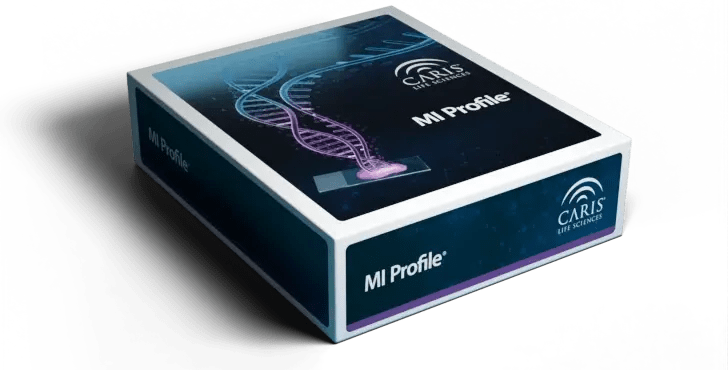
MI Profile®
Comprehensive molecular profiling that helps guide precise and individualized treatment decisions.
Assessment of DNA, RNA and Proteins from tumor tissue to reveal a more complete molecular blueprint for clinicians to assess next steps forward in a patient’s care.
Available globally
*Excluding United States of America, EEA, EU and CH countries
Tumor Tissue Sample
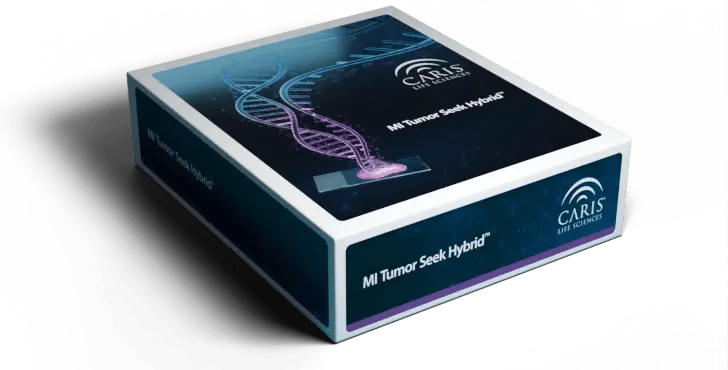
MI Tumor Seek Hybrid™
One assay that provides a comprehensive molecular blueprint that saves tissue without compromising results.
A laboratory developed test (LDT) that simultaneously captures both DNA and RNA in one assay. Results also include AI signatures to help confirm diagnosis and improve therapy selection.
Available globally
*Excluding USA, EEA, EU and CH
Ready to order molecular testing?
Our team is here to help you every step of the way.
Contact a Professional
